Customs seizure of goods: common causes and available legal remedies
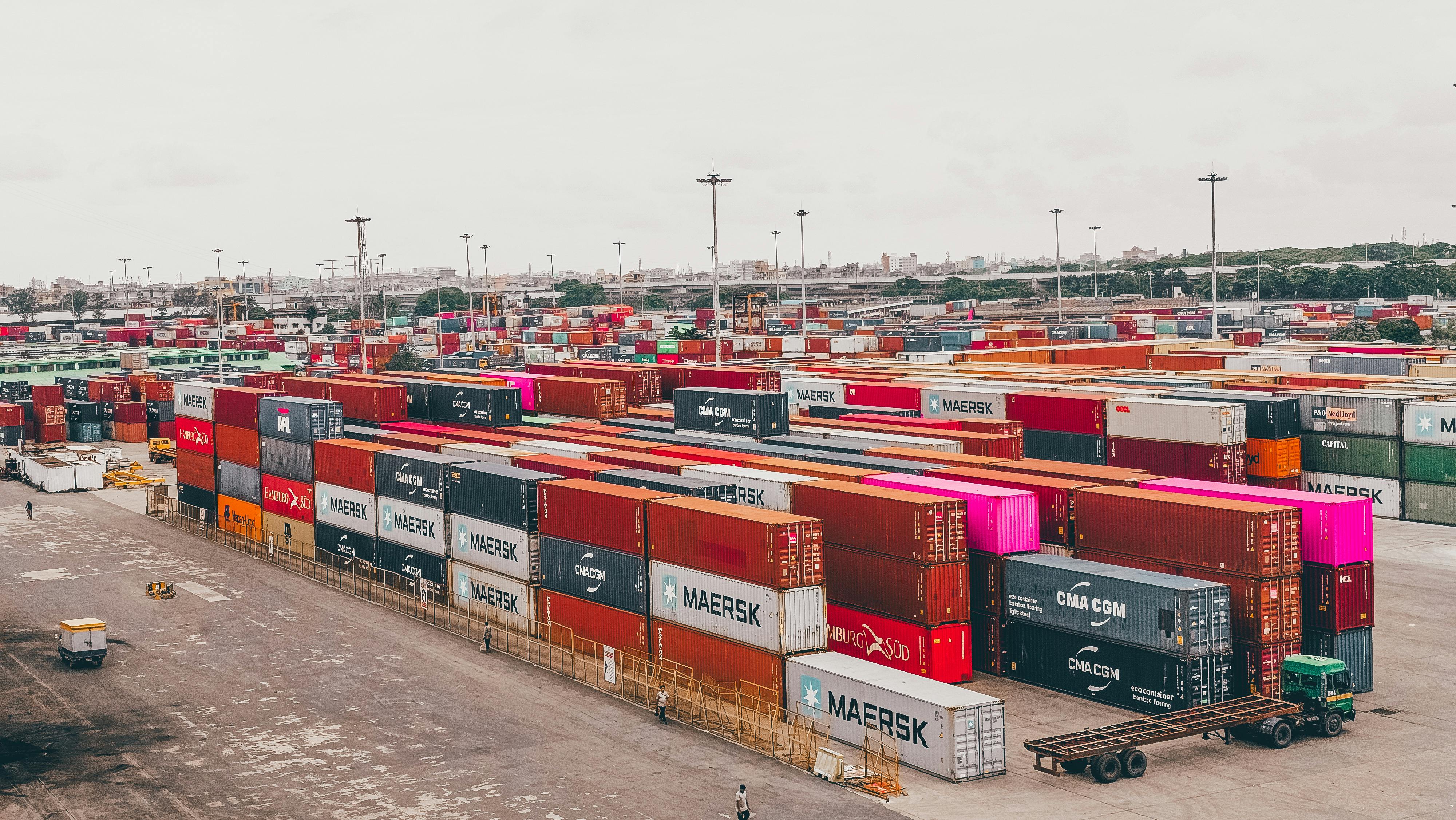
The truck arrives at customs, undergoes inspection, and suddenly the goods are detained. What seemed like a routine import operation turns into a crisis: the goods are seized, days are running by, storage costs are accumulating, and there is uncertainty about whether the entire cargo will be lost.
The seizure of goods at customs is one of the most feared situations in Mexican foreign trade, and it occurs more frequently than many importers and exporters believe. Understanding why it happens and what to do when it occurs can make the difference between recovering the goods and losing them definitively to the tax authority.
What is the precautionary seizure of goods at customs and what is its legal basis?
The precautionary seizure of goods is the retention of the same for failing to comply with the provisions established in the Customs Law, and its objective is to prevent continued non-compliance with said legal provisions. Customs authorities are in charge of carrying out the precautionary seizure in exercise of their powers of verification, as established by law.
Its legal basis is found mainly in Article 151 of the Customs Law, which lists the cases in which the authority is authorized to proceed with the seizure. Following the reform decree published in the Official Gazette of the Federation on November 19, 2025—with entry into force on January 1, 2026—there has been a hardening of fines and sanctions related to tax omission, failure to comply with non-tariff regulations and restrictions, the destination of the goods, as well as new causes for precautionary seizure.
It is important to distinguish between two types of seizure that can occur in the customs context:
Precautionary seizure: This occurs during customs clearance or the verification of goods, as a precautionary measure while potential irregularities are being investigated. It is the most common and the one that triggers the PAMA (Administrative Procedure in Customs Matters).
Definitive seizure: This is the one that the authority executes to ensure the payment of a tax credit that has already been determined and is enforceable.
This article focuses on the precautionary seizure and the administrative procedure that follows it, as this is where the importer or exporter has the largest window of defense.
What are the most frequent causes of seizure of goods at customs?
The Administrative Procedure in Customs Matters (PAMA) may initiate due to customs clearance, verification of goods transport and foreign vehicles in transit, home visits, or any other verification act, when irregularities are detected that lead to the precautionary seizure of the goods established in Article 151 of the Customs Law.
The specific causes of Article 151 of the Customs Law that originate the precautionary seizure are:
Cause for Seizure | Description |
Entry through unauthorized location | When goods are introduced into the national territory through an unauthorized location or when foreign goods in international transit deviate from the fiscal routes or are transported in means other than those authorized. |
Prohibited goods or without permits | When dealing with imported or exported goods that are prohibited or subject to non-tariff regulations and restrictions, and compliance is not verified or the payment of compensatory duties is omitted. |
Lack of customs documentation | When it is not verified with the corresponding customs documentation that the goods underwent the procedures provided for in the Law for their introduction into the national territory, or when their legal stay or possession is not verified. |
Undeclared or excess goods | When, during customs clearance or verification of goods in transit, undeclared or excess goods are detected representing more than 10% of the total value declared in the customs documentation. |
Undervaluation | Declaring a value 50% lower than the one that actually corresponds to the goods, a practice known as undervaluation. |
Cargo vehicle without entry document | When cargo vehicles carrying imported goods enter the fiscal precinct without the corresponding customs entry document to perform customs clearance. |
Temporary goods not located at registered address | When dealing with temporarily imported goods and they are not sent to the registered addresses, or to those declared in the customs entry documents, or they are not located at said addresses. (Cause added in the November 2025 reform.) |
In practice, the irregularities that most frequently trigger seizure are tariff classification errors, the lack of permits or official standards (NOMs), invoices with non-existent or incorrect supplier data, and differences between what is declared in the customs entry document and the physical goods.
What is PAMA and how does it develop after the seizure of goods?
The Administrative Procedure in Customs Matters (PAMA) is the set of acts provided for in the Customs Law, linked successively, with the purpose of determining omitted contributions and, if applicable, imposing the corresponding sanctions in foreign trade matters, while respecting the individual's right to a hearing by considering the evidence and arguments with which they intend to justify the legality of their acts.
The PAMA is developed in these stages:
Drawing up the start report (Article 150 LA): Customs authorities draw up the start report of the administrative procedure in customs matters, which consists of: the identification of the authority carrying out the process, the facts and circumstances motivating the start of the procedure, the description, nature, and other characteristics of the goods, and the taking of samples, if applicable.
Notification and defense period (10 business days): Customs personnel must notify the importer, exporter, or their legal representatives in writing of the start of the PAMA, indicating that they have a period of ten business days to offer to the authority that drew up the report the evidence and arguments they deem appropriate. This period cannot be extended and starts running the day after the notification takes effect.
Technical tariff classification board (when applicable): If the seizure originated from a discrepancy in the tariff classification, the interested party can request the holding of an advisory technical board within the 10-day period. If the tariff classification stated in the customs entry document proves to be correct, the customs authority will agree to lift the seizure and deliver the goods, rendering the procedure without effect.
Analysis of the file and resolution (maximum 4 months): When the interested party does not present evidence or if it does not refute the assumptions for which the goods were precautionarily seized, customs must issue a definitive resolution within a period not exceeding four months, counted starting the day after the file is properly compiled. If the authority does not issue a resolution within that period, the proceedings remain without effect.
An important custom: PAMA invariably presupposes the precautionary seizure of goods, this being precisely the main characteristic of this administrative procedure. There is no PAMA without prior seizure.
What are the legal and economic consequences of not defending oneself in a PAMA?
An inadequate or incomplete defense within the PAMA can generate extremely adverse consequences for taxpayers, such as the permanent loss of goods, the imposition of hefty fines, suspension from the registry of importers or exporters, and even the cancellation of the digital stamp certificate.
In economic terms, the customs authority can impose sanctions (fines) ranging from 70% to 150% of either the value of the omitted taxes or the commercial value of the goods. To this, one must add the storage costs that accumulate day by day while the goods remain detained.
The most serious scenario is related to the nature of the irregularity: conduct such as smuggling, omission of foreign trade contributions, document forgery, or introduction of goods through unauthorized locations are contemplated as serious offenses according to Article 19 of the Political Constitution of the United Mexican States, which enables mandatory pretrial detention.
If your company operates under the IMMEX program or performs export operations, exposure to customs authority acts is particularly high. Knowing in advance what to do in these situations is part of a solid preventive strategy; therefore, having legal defense in IMMEX or export operations against authority acts can be decisive when time is of the essence.
How to legally defend your goods during the PAMA correctly?
Defense in a PAMA requires acting with speed and precision. The 10 business days to present evidence and arguments cannot be extended, meaning it is fundamental to have specialized foreign trade legal advisory from the moment the notification is received.
The fundamental rights of the importer during the PAMA are:
To receive a copy of the start report of the procedure.
To present in writing evidence and arguments within the period of 10 business days.
To request the technical tariff classification board when the seizure derives from a discrepancy in that area.
To substitute the seized goods for a guarantee in certain cases.
The right to have the procedure resolved in a maximum of 4 months, counted starting from when the administrative file is properly compiled.
The documents typically offered as evidence to refute the seizure include:
Customs entry document (pedimento) and its annexes
Commercial invoice from the foreign supplier
Transport documents (Bill of Lading, airway bill, consignment note)
Certificates of origin when applicable
Required permits, NOMs, or non-tariff regulations
Documentation verifying the real value of the goods
Technical tariff classification report, if the seizure derives from that cause
On the possibility of substituting the seized goods with a guarantee: in certain cases, the interested party can offer a bond, deposit, or letter of credit for the value of the goods plus the presumably omitted contributions to recover possession of the goods while the PAMA is being resolved. This is particularly important when dealing with perishable or high-value goods that lose their utility during the procedure.
What legal remedies exist if the resolution of the PAMA is unfavorable?
The Customs Law does not provide for any means of defense during the procedure; however, the Fiscal Code of the Federation does provide for an administrative appeal against the resolution issued by the customs authority when ending the PAMA.
The means of defense available once a definitive resolution has been issued are:
Administrative appeal for revocation (optional): Article 117 of the Fiscal Code of the Federation indicates that the appeal for revocation is applicable against definitive resolutions issued by customs authorities. Filing said appeal is optional prior to going to the Federal Court of Administrative Justice, and must be submitted within thirty days following the day on which the notification took effect.
Contentious administrative trial (nullity trial): If the interested party is dissatisfied with the resolution issued by the authority, it can be challenged through a contentious administrative trial before the Federal Court of Administrative Justice. There are thirty business days to present the lawsuit, counted starting from when the notification of the challenged resolution takes effect. This trial is processed before the Specialized Chambers in Foreign Trade Matters of the TFJA.
Direct Amparo lawsuit: In an extraordinary manner, against the ruling of the contentious administrative trial, a direct Amparo lawsuit can be promoted, with a period of fifteen business days counted starting the day after the notification of the ruling took effect.
An important strategic consideration: the appeal for revocation is not an effective resource against PAMA resolutions, since for the most part they are resolved in favor of the authority, which consequently means that the taxpayer continues their path through customs defense with the nullity lawsuit and finally the direct Amparo. Therefore, in many cases, specialized lawyers recommend going directly to the contentious administrative trial.
If the resolution of the PAMA resulted in a tax credit and the authority initiates its coercive collection, the administrative execution procedure can also be activated. In that scenario, it is useful to understand how government collection and mechanisms to recover debts or challenge improper collections work, given that the defense tools at that stage are different from those of the PAMA.
How to prevent the seizure of goods at customs before it occurs?
The best defense in customs matters always begins before the goods cross the border. These are the most effective preventive measures to reduce the risk of seizure:
Verify the tariff classification in advance. Tariff classification errors are one of the main causes of seizure. Carrying out a formal classification inquiry or requesting a technical report prior to import eliminates this risk.
Acredit compliance with non-tariff regulations and restrictions. Failing to comply with any Non-Tariff Regulation or Restriction (RRNA), such as permits, notices, NOMs, and compensatory duties, is one of the most frequent causes for initiating a PAMA.
Verify the authenticity of the supplier's data on the invoice. When the name or fiscal address of the supplier or importer indicated on the entry document or invoice is false or non-existent, customs will proceed to initiate the PAMA.
Reconcile the declared value on the entry document with the real value of the goods. Significant differences in value are systematically detected by the authority through cross-referencing information.
Keep control of temporarily imported goods. With the 2025 reform, the failure to locate temporary goods at registered addresses is now an express cause for precautionary seizure.
Keep the Registry of Importers updated and active. Suspension from the registry prevents the clearance of goods and can cause situations that result in seizure.
In a broader scenario, companies with regular foreign trade operations must consider that acts of the customs authority are not limited to the moment of clearance: home visits and desk audits can also originate a PAMA. Having a lawyer specialized in contracts and operations with government implications who understands the regulatory environment of foreign trade can help structure international sales contracts and agreements with suppliers in a way that minimizes exposure to customs irregularities.
Seizure of goods at customs: what every importer and exporter must have clear
The precautionary seizure of goods at customs is not the end of the process: it is the start of an administrative procedure where the importer has concrete rights and real legal tools to defend themselves. The period of 10 business days to present evidence and arguments is short but sufficient when acting quickly and with documentation in order. And if the resolution of the PAMA is not favorable, the legal path continues through the contentious administrative trial before the Specialized Chambers in Foreign Trade of the TFJA.
What has no remedy is inaction: 40% of PAMAs are resolved in favor of the importer when an adequate defense is presented. Failing to defend oneself is equivalent to accepting the confiscation. The key will always be to have specialized advisory from the very first moment, have the supporting documentation available, and understand that every day that passes without acting is a day working against your interests. If, in addition, your company faces situations that can be classified as serious administrative offenses in the context of operations with public agencies, understanding what a serious administrative offense is and how to defend yourself before the ASF or the SFP adds another layer of protection to your comprehensive compliance strategy.
Frequently Asked Questions
Can I continue importing while my goods are seized in a PAMA?
It depends. The start of the PAMA does not automatically suspend your ability to import, unless the authority also decrees suspension from the Registry of Importers. However, if the PAMA concludes with an unfavorable resolution and you do not appeal, sanctions of this nature affecting your future operations could arise.
What happens if the authority does not issue a resolution within the four months established by law?
If the definitive resolution is not issued within the term of reference, the actions of the authority that started the PAMA will remain without effect. In practical terms, this means that the goods must be released and the procedure is terminated. This is an expiration that can be expressly invoked.
What happens to the seized goods during the time the PAMA lasts?
The goods remain under customs custody or in the general deposit warehouse designated by the authority. Storage costs are borne by the importer, which makes it even more urgent to act quickly to refute the seizure or substitute it with a guarantee.
Can the customs broker also be sanctioned because of the seizure?
Yes. The customs broker can be designated as jointly liable within the PAMA if the irregularity is related to incorrect information declared in the entry document. This has both financial and disciplinary implications, including the potential cancellation or suspension of their license.
Is it possible to recover the goods before the PAMA concludes?
In certain cases yes, by substituting the seizure with a sufficient guarantee covering the value of the goods plus the presumably omitted contributions. This mechanism is particularly relevant for perishable goods, seasonal items, or goods that quickly lose value over time.
Can the PAMA lead to criminal consequences?
Yes, in the most serious cases. Conduct such as smuggling or introducing goods through unauthorized locations is classified as serious offenses in Mexico and can lead to the detention of the involved parties with mandatory pretrial detention. Therefore, at any sign that the PAMA might have a criminal dimension, it is essential to have specialized legal defense immediately.
Can I present the appeal for revocation and the contentious trial at the same time?
No. An act cannot be challenged via a contentious administrative trial if a resolution has already been issued on the appeal for revocation or a prior ruling. You must choose one way and exhaust it. If you choose the appeal for revocation and the result is unfavorable, then you can go to the contentious trial; but they cannot be processed simultaneously.
Recommended Blogs


Practice Areas
If you are looking for a reliable, efficient law firm with the capacity to protect your interests, contact us today for a consultation!